Proudly serving Phoenix, Scottsdale, Mesa, Glendale, Chandler, Tempe & surrounding areasCall or Text 24/7: 480-210-5203
Wide drone view of suburban neighborhoods with red tile roofs and desert landscaping in Phoenix, AZ.

Whole House Surge Protector Installation in Phoenix, AZ for Complete System Defense

Phoenix Electrical Panel Upgrades installs whole house surge protectors for homeowners in Phoenix, Arizona. We also provide 200 amp and 400 amp service upgrades and subpanel installation when your electrical needs call for more capacity. Our work starts at the panel, with protection selected for your service equipment and connected appliances.

Monsoon lightning and utility switching can send voltage spikes into your home, while air conditioning compressors create smaller surges as they cycle. Those events can damage HVAC controls, refrigerator electronics, and other sensitive equipment. We assess your panel and grounding before recommending a surge protective device. Contact us to discuss your existing equipment and the work needed for installation.

Our Arizona Registrar of Contractors licensed electricians install Type 1 and Type 2 surge protective devices rated to UL 1449. We coordinate City of Phoenix permits when required and complete load, continuity, and voltage checks before closing out the work.

Phoenix Electrical Panel Upgrades provides whole house surge protector installation in Phoenix, Scottsdale, Tempe, Mesa, Chandler, Glendale, and the surrounding Maricopa County metro area.

★ ★ ★ ★ ★4.9/5 Customer Satisfaction · 29 Years of Electrical Experience · 2,000+ Electrical Projects Completed · Licensed, Bonded & Fully Insured · Serving Homes & Businesses Valleywide

Whole Home Surge Protection & Benefits

What Is a Whole House Surge Protector?

A whole house surge protector is a surge protective device, or SPD, installed at the main electrical panel or meter base. Also called a surge arrester or transient voltage surge suppressor (TVSS), it addresses voltage spikes where power enters the home.

When a voltage spike occurs, the device diverts excess current through the grounding system. Effective protection depends on the device, its connections, and the condition of the grounding and bonding at your electrical service.

A plug-in strip serves the equipment connected to it; panel-mounted protection serves circuits throughout the house. Most residential units we install carry surge current ratings between 100 kA and 200 kA, with the selection based on your equipment and exposure.

Benefits for Your Home and Appliances

Modern homes depend on electronic controls in appliances, comfort equipment, and everyday devices. Panel-level surge protection helps reduce their exposure to transient voltage and gives you a practical way to monitor the protection in place.

  • Protection for circuits throughout the home
  • Reduced surge exposure for HVAC control boards
  • Added protection for refrigerator and washer electronics
  • Support for security systems and garage door opener electronics
  • A response to utility switching and appliance-generated surges
  • Grounding and bonding checked as part of installation
  • Visible device status for routine checks
  • Protection planned alongside panel or subpanel upgrades
Panel-Level Protection

Surge Protector Installation & Panel Services

We install surge protection on suitable existing panels and include it in service upgrades when needed. Panel condition, available breaker space, grounding, and the equipment being served guide the scope of work.

Main Panel Surge Protector Installation

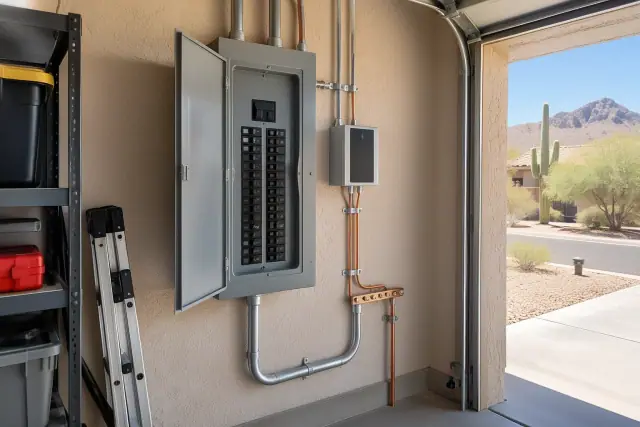
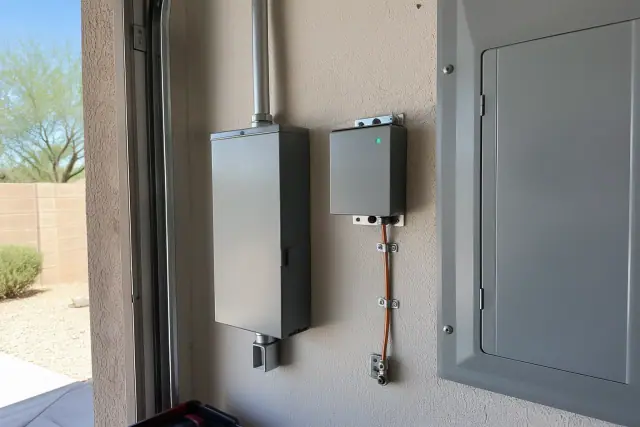
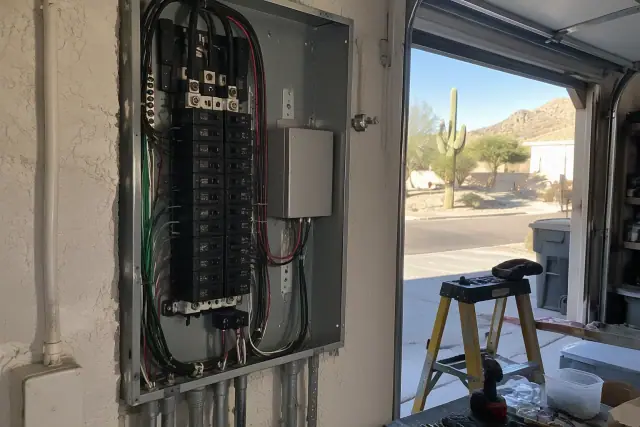
Whole house surge protector installation on a stucco garage in Phoenix, AZ.

We assess the existing service and mount the SPD inside or directly beside the main panel, as the equipment allows. The installation includes compatible breaker connections, grounding verification, and checks of the device status after power is restored.

Request Estimate

200 Amp Service Upgrades with Surge Protection

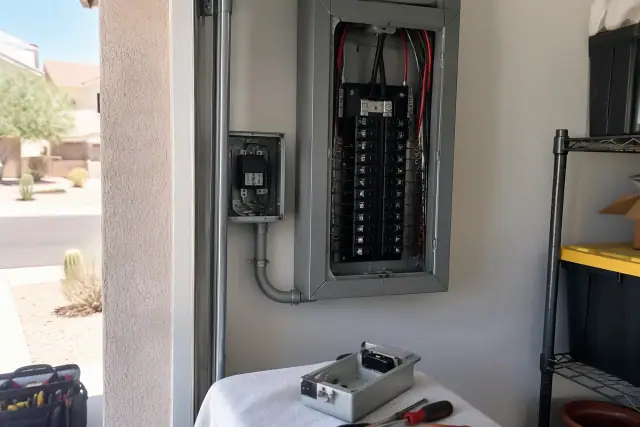
200 amp electrical service upgrade and surge protector in a Phoenix, AZ garage.

Adding surge protection during a 200 amp service upgrade lets us plan the device and breaker arrangement together. It combines capacity work and surge protection in one project without a separate installation visit later.

Request Estimate

400 Amp Service Surge Protection

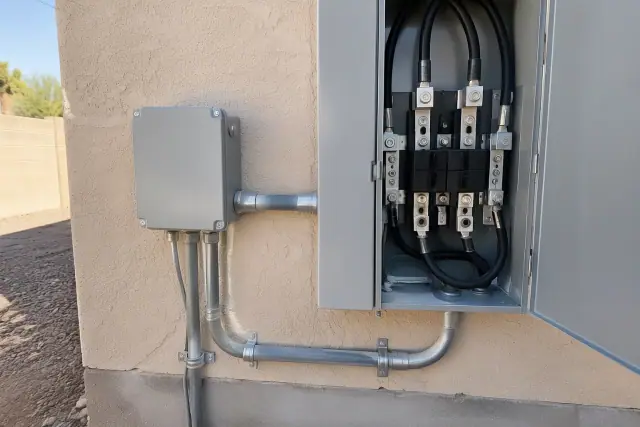
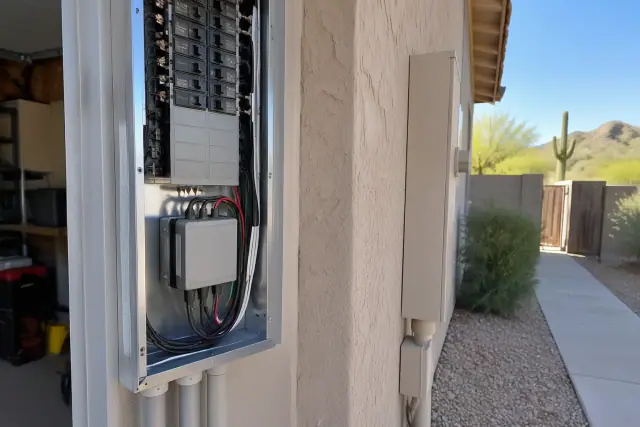
Whole house surge protector installation on a stucco wall in Phoenix, AZ.

Larger homes with pool equipment, workshops, or EV charging may use 400 amp service. We evaluate the panel arrangement and connected equipment so surge protection is included in the service plan for these higher-load properties.

Request Estimate

Subpanel Surge Protection Installation

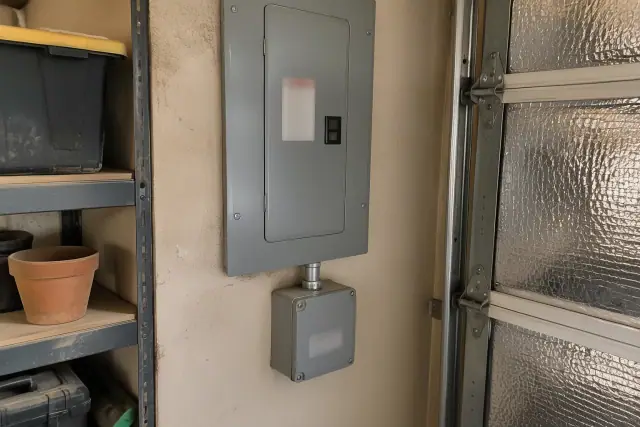
Subpanel surge protection installation in a garage in Phoenix, AZ.

A guest house, workshop, or pool equipment subpanel can be a useful location for secondary surge protection. We review equipment served far from the main panel and determine whether an additional SPD fits the installation.

Request Estimate

Older Panel and Service Equipment Replacement

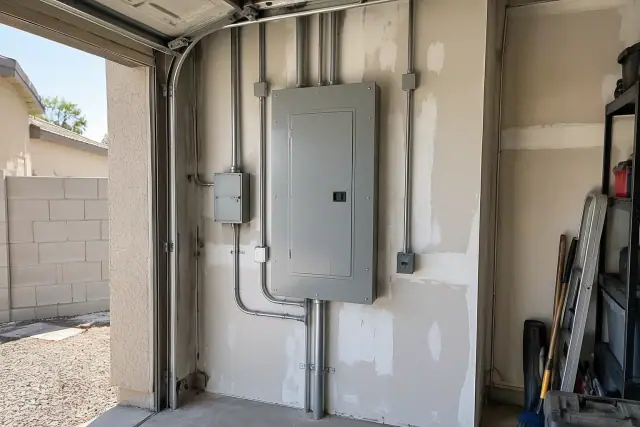
Upgraded main breaker enclosure on a garage wall in Phoenix, AZ, with fresh drywall and conduit.

Federal Pacific or Zinsco panels may need replacement before adding an SPD makes sense. Our panel services also include fuse box replacement and conversion, circuit breaker repair and replacement, electrical meter box replacement, and commercial electrical panel upgrades.

Request Estimate

Surge Protector Maintenance and Replacement

Whole house surge protector maintenance and replacement on a stucco garage wall in Phoenix, AZ.

A changed status indicator or visible device damage calls for an inspection. We check panel connections, grounding, and the breaker before replacing a failed SPD so an underlying electrical issue is addressed along with the device.

Request Estimate
Matching the Equipment

Surge Protection Equipment & Installation Options

The right arrangement depends on where protection is needed and what the electrical service can support. We consider device type, surge current rating, panel condition, and the equipment connected to each panel.

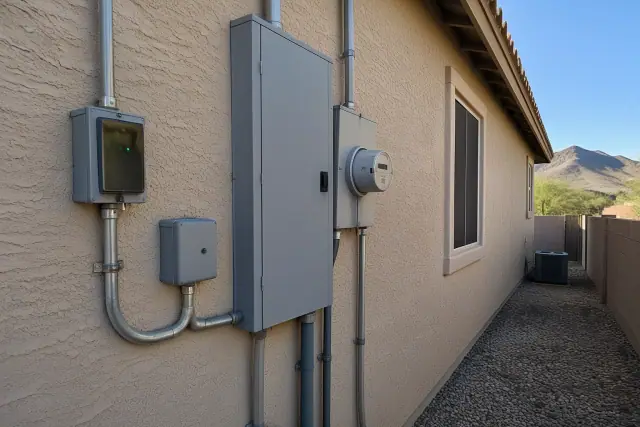
Whole house surge protector installation on a stucco home exterior in Phoenix, AZ.

Type 1 and Type 2 Surge Protective Devices

We install Type 1 and Type 2 SPDs rated to UL 1449. Device selection starts with the service arrangement and intended installation location, followed by a review of connections and grounding.

  • Device type matched to the service arrangement
  • UL 1449 rating reviewed during selection
  • Installation location evaluated at the service equipment
  • Grounding and bonding checked before installation
  • Status indicator checked during closeout
Request Estimate
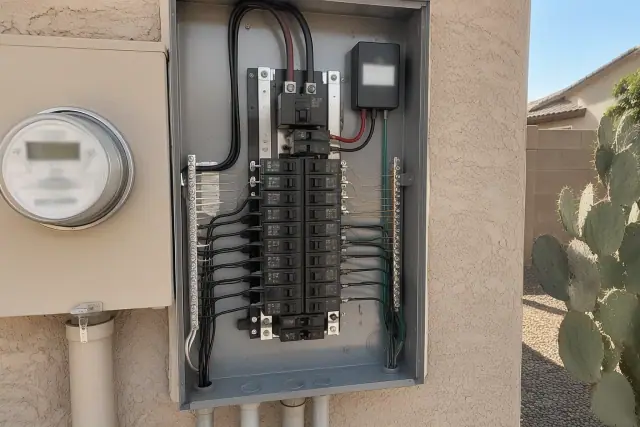
Main electrical panel surge protection installation on a stucco home exterior in Phoenix, AZ.

Main Panel Protection for Household Circuits

Protection at the main panel addresses surges entering the home and serves the branch circuits supplied by that panel. We assess the existing equipment before selecting the mounting location and connection method.

  • Main service and panel condition reviewed
  • Mounting inside or directly adjacent to the panel
  • Dedicated breaker connection where appropriate
  • Line, neutral, and ground connections inspected
  • Voltage and breaker function checked after installation
Request Estimate
Secondary protection whole house surge protector installation at a subpanel in Phoenix, AZ.

Secondary Protection at a Subpanel

An additional SPD can support equipment supplied from a separate subpanel. This option is especially relevant when sensitive electronics or equipment sit far from the main service.

  • Guest house subpanel assessment
  • Workshop equipment review
  • Pool equipment pad protection
  • Sensitive electronics considered during selection
  • Secondary SPD coordinated with main-panel protection
Request Estimate
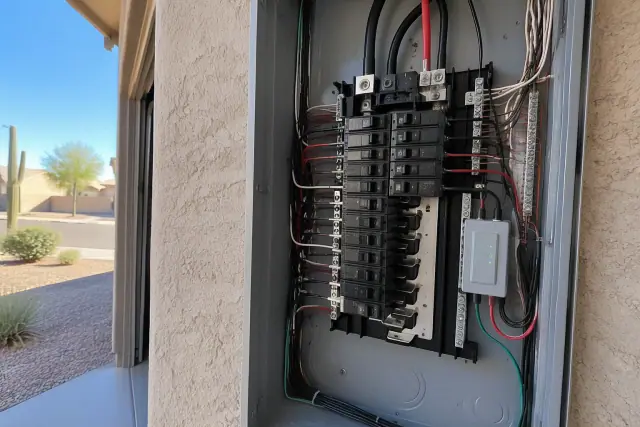
Technician wiring a whole house surge protector during a panel upgrade in Phoenix, AZ.

Surge Protection During a Panel Upgrade

An outdated or undersized panel may need broader work than adding a device. Planning the upgrade and surge protection together lets us address service capacity, breaker configuration, and grounding within the same project.

  • Existing service capacity assessed
  • Panel condition reviewed before adding equipment
  • Breaker arrangement planned with the SPD
  • Grounding corrections included when needed
  • Permit and inspection needs reviewed for the project
Request Estimate
Contractor replacing an exhausted whole house surge protector in a Phoenix, AZ garage.

Replacement of an Exhausted Surge Protector

A device that has absorbed a major surge may no longer provide active protection. Before replacement, we check for connection problems, corrosion, and breaker mismatches that could affect the new unit.

  • Failed status indicator investigated
  • Loose panel connections checked
  • Corrosion at connection points reviewed
  • Breaker compatibility verified
  • Replacement device status confirmed
Request Estimate
Start with the Panel

Choosing Surge Protection for Your Home

Start with the electrical service you have, the equipment you rely on, and any history of storm-related appliance trouble. A panel assessment helps identify whether you need an SPD installation, grounding corrections, or a larger panel project.

Licensed Electrical Work

Our electricians hold Arizona Registrar of Contractors licensing and handle the panel work involved in surge protector installation. We review grounding, breaker compatibility, and the applicable surge protection requirements, including National Electrical Code Article 230.67.

Experience with Phoenix Panels

Our work includes Sunnyslope ranch homes with original 1960s wiring and new-build subpanels in Ahwatukee. That range of equipment matters when assessing older connections, grounding condition, and the space available for an SPD.

Testing Before Closeout

We verify voltage readings, breaker function, and the device status indicator after installation. When the project requires a permit, we coordinate final inspection through the City of Phoenix Development Services Department.

Understanding Your Exposure

Surge Problems We Assess

Storm exposure, frequent equipment cycling, and older electrical connections each raise different concerns. We review those conditions at your panel and explain which installation or repair work addresses what we find.

Request a Panel Assessment

Monsoon Lightning Surges

From late June through September, monsoon storms across the Salt River Valley can send surges through nearby power lines or transformers without a direct strike to the home. Overhead utility lines in parts of Laveen and the West Valley are one exposure we consider during an assessment.

Utility Switching and Grid Fluctuations

Utility switching, equipment failures, and maintenance can introduce brief voltage spikes. Phoenix draws on a grid serving over 1.6 million residents, and repeated smaller events can affect appliance electronics even without an obvious single failure.

Air Conditioning Compressor Cycling

Air conditioning compressors cycle heavily from May through September in Phoenix. Along with well pumps and other major appliances, this equipment can generate internal surges that repeatedly expose sensitive controls.

Appliance Control Board Damage

Refrigerators, variable-speed HVAC equipment, and washers depend on electronic controls. Repeated voltage spikes can contribute to control board damage, so unexplained failures after outages are worth discussing during the panel assessment.

Inadequate Grounding and Bonding

An SPD depends on a suitable path for excess current. We inspect grounding rods and bonding jumpers because adding a surge protector without addressing inadequate grounding can leave the installation ineffective.

Loose Connections or a Failed Indicator

A failed indicator after a large surge can signal an exhausted device. Loose connections, corrosion, an undersized SPD, or a mismatched breaker may also need attention before replacement restores the intended protection.

From Assessment to Testing

Our Surge Protector Installation Process

We begin with the panel and grounding, then complete the electrical connections and operational checks. You receive a scope based on the equipment in place, including any corrections needed before the SPD can be installed.

01.

Assess the Panel and Electrical Load

We review panel condition, electrical load, and the appliances or equipment being served. This establishes whether the existing service is suitable for an SPD or needs additional panel work.

02.

Inspect Grounding and Bonding

We inspect the grounding system, rods, and bonding jumpers before installation. Any corrections needed for an effective connection are identified as part of the project scope.

03.

Isolate Power and Prepare the Panel

Our electrician shuts down power at the main disconnect and follows the lockout process for the work. We prepare the mounting and breaker arrangement for the selected device.

04.

Mount and Connect the Surge Protector

We mount the SPD close to the panel and complete the required line, neutral, and ground connections. Most residential installations use a two-pole breaker, with the connection matched to the equipment.

05.

Restore Power and Test the Installation

After completing the connections and panel closeout, we restore power and check voltage readings across the service legs with a multimeter. Breaker function, continuity, and the SPD indicator are part of the final checks.

06.

Complete Inspection and Review Device Status

Where a City of Phoenix permit is required, we coordinate the final inspection. We also review the status indicator with you so you know what to watch for after storms or other surge events.

Plan Your Installation

Schedule a Surge Protection Assessment

Tell us about your panel, recent appliance failures, or planned service upgrade. We will assess the electrical equipment and grounding, explain the installation scope, and provide a firm quote for the work.

Costs, Care, and Installation

Whole House Surge Protector FAQs

Get answers about installation costs, panel compatibility, maintenance, and surge protection for Phoenix homes. Your panel assessment confirms the equipment and work appropriate for your property.

Call About Surge Protection

Installation typically runs between $300 and $350, with total costs ranging from $250 to $500 depending on the device and panel condition. That installation range covers equipment and labor at the main panel. We provide a firm quote after inspecting the panel and grounding, including any additional work needed.

Yes. This work involves the main electrical service, breaker connections, and grounding, so it should be handled by a licensed electrician. Our electricians assess the panel, complete the installation, and coordinate permits when required.

Monsoon lightning, utility fluctuations, and frequent air conditioning use all make surge exposure worth considering. An SPD helps reduce exposure for HVAC controls, refrigerator electronics, and other costly equipment. The assessment considers both your existing service and the equipment you want to protect.

A device can become exhausted after a large surge, often indicated by a changed status light. Other problems include inadequate grounding, loose or corroded connections, incorrect device selection, and breaker mismatches. We inspect those conditions before deciding whether replacement alone is enough.

Labor typically runs $145 to $310 for a one to two hour installation on a suitable panel. A 100 kA SPD typically costs $50 to $100, while a 200 kA unit costs $100 to $300. Grounding upgrades, when needed, typically run $150 to $400. Panel repairs, replacement work, and any required permit fees also affect the final scope and price.

Permit needs depend on the project scope. When required, we coordinate permits through the City of Phoenix Development Services Department and arrange final inspection. The assessment identifies whether the job includes broader panel or service work.

A plug-in surge strip serves only the equipment connected to it. A panel-mounted SPD addresses voltage spikes at the electrical service and serves the circuits supplied by that panel. It also brings grounding condition and panel connections into the installation assessment.

The SPD diverts excess current through the grounding system, so inadequate grounding reduces its effectiveness. We check grounding rods and bonding jumpers before completing the installation. Necessary corrections are included in the proposed work.

That depends on the panel's condition and suitability for the device. A Federal Pacific or Zinsco panel may need replacement, and other older equipment may need grounding corrections first. We assess those needs before recommending an SPD installation.

Yes, secondary surge protection can be installed at a suitable subpanel serving a guest house, workshop, or pool equipment. It can be useful where the equipment is far from the main panel. We review the subpanel and connected equipment before choosing the arrangement.

We recommend a visual check twice a year, ideally before and after monsoon season. Confirm that the indicator shows active protection and arrange an inspection if it changes after a storm or surge event. A failed indicator should be assessed before assuming protection remains active.

Devices typically last 20 to 30 years under normal conditions, but a significant lightning event or repeated large surges can exhaust them much earlier. Treat the status indicator and device condition as more useful than age alone. If the unit shows failure, we inspect its connections, grounding, and breaker before replacement.

Flickering during storms or appliance failures shortly after an outage are reasons to have the electrical system assessed. Overhead lines, older transformers, solar equipment, well pumps, and sensitive electronics also belong in that discussion. These details help us evaluate the panel and the protection appropriate for your home.