Proudly serving Phoenix, Scottsdale, Mesa, Glendale, Chandler, Tempe & surrounding areasCall or Text 24/7: 480-210-5203
Wide drone view of suburban neighborhoods with red tile roofs and desert landscaping in Phoenix, AZ.

Subpanel Installation in Phoenix, AZ for Workshops, Garages & Home Additions

Phoenix Electrical Panel Upgrades provides subpanel installation and electrical panel services in Phoenix, AZ. We route power to garages, workshops, casitas, and home additions after checking the capacity of the existing service. Our electrical work also includes 200 amp and 400 amp service upgrades, circuit breaker repair and replacement, and fuse box replacement. When an older panel needs attention, we handle Federal Pacific and Zinsco panel replacement as part of the project.

Phoenix homes built during the 1970s through 1990s often have 100 or 150 amp service facing demands that were not part of the original design. Pool pumps, ductless mini-splits, EV chargers, and air conditioning can put pressure on available capacity. A subpanel adds a place for circuits, but it does not increase the main service rating. We inspect the existing equipment and calculate the added load before recommending an installation or service upgrade.

Our licensed, bonded, and insured electricians plan the feeder route, breaker sizing, and permit requirements before installation. Request a free electrical estimate for the circuits and equipment you want to add.

Phoenix Electrical Panel Upgrades provides subpanel installation in Phoenix and nearby Scottsdale, Tempe, Mesa, Glendale, and Chandler.

★ ★ ★ ★ ★4.9/5 Customer Satisfaction · 29 Years of Electrical Experience · 2,000+ Electrical Projects Completed · Licensed, Bonded & Fully Insured · Serving Homes & Businesses Valleywide

Subpanel Options & Benefits

What Does a Subpanel Do?

A subpanel is a secondary load center fed from the main service panel. It has its own breakers and bus bar to distribute power to a defined area of the property, such as a detached garage or new addition.

The feeder carries power from the existing service to the new panel. This arrangement can put circuit control closer to the equipment it serves without adding another utility meter or changing the main breaker rating.

Available breaker space and available electrical capacity are different questions. If the existing service cannot support the proposed load, adding a subpanel alone will not resolve that limit; a service upgrade may be needed first.

Benefits of a Properly Planned Subpanel

A subpanel works best when its location, feeder, and circuit layout match how you use the space. Our planning keeps the new circuits organized while accounting for the limits of the main service.

  • Bring circuit control closer to a garage, workshop, or addition.
  • Provide breaker space for planned lighting, outlets, and equipment.
  • Group new addition circuits separately from existing house circuits.
  • Match feeder capacity to the calculated electrical demand.
  • Account for feeder distance when selecting conductor size.
  • Plan a detached structure's disconnect and grounding.
  • Choose panel equipment that fits the property's existing installation.
  • Coordinate permits and inspections as part of the work.
Electrical Panel Services

Subpanel Installation & Related Services

We evaluate the full path from the service entrance to the new circuits. Depending on the condition and capacity of your existing equipment, the project may include a subpanel, a service upgrade, or replacement of aging panel components.

Residential Subpanel Installation

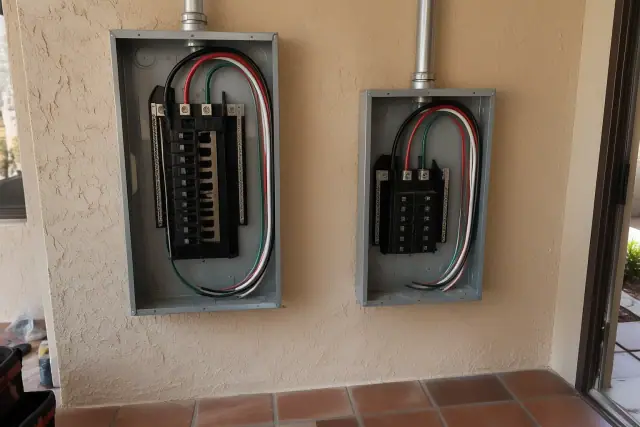
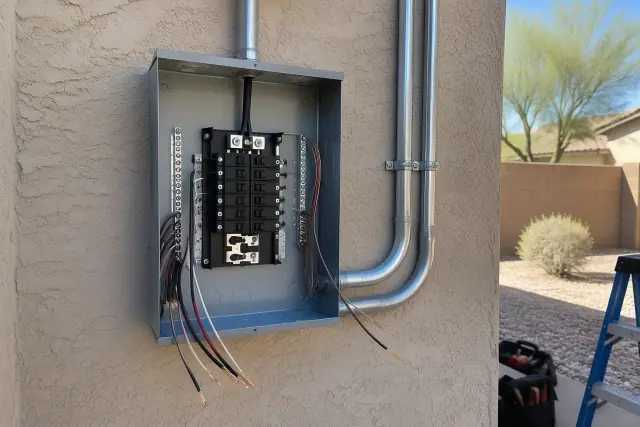
Electrician installing a residential metal subpanel with conduit and wires outdoors in Phoenix, AZ.

We install secondary panels for garages, casitas, workshops, and additions. Load calculations, feeder routing, and the circuits planned for each space determine the equipment and installation scope.

Request Estimate

200 Amp Service Upgrades

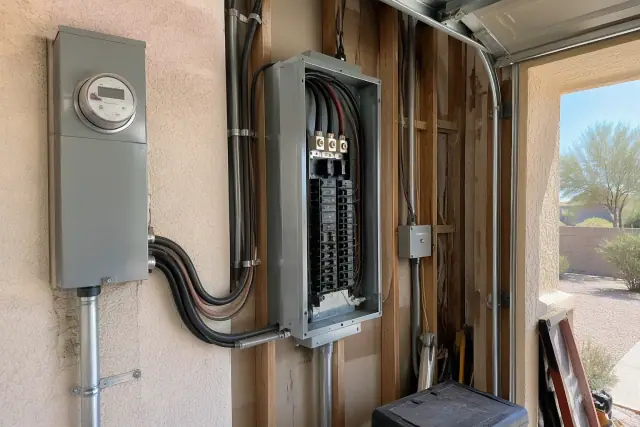
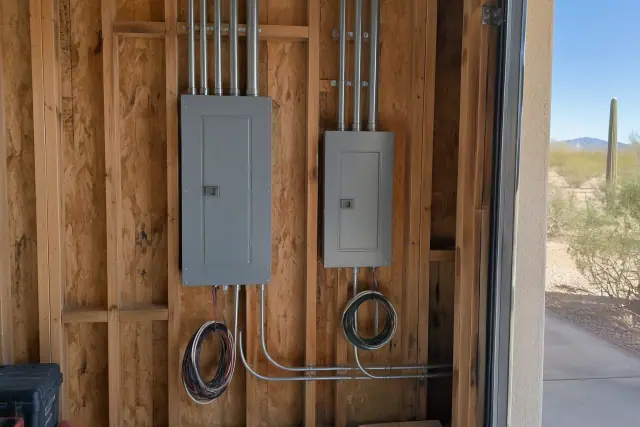
200 Amp service upgrade with feeder wires and breakers inside a residential garage in Phoenix, AZ.

A 200 amp upgrade can address homes originally supplied by 60 or 100 amp service when the load calculation supports that size. Service entrance work may include the meter socket, main breaker panel, conductors, and grounding for an overhead or underground supply.

Request Estimate

400 Amp Service Upgrades

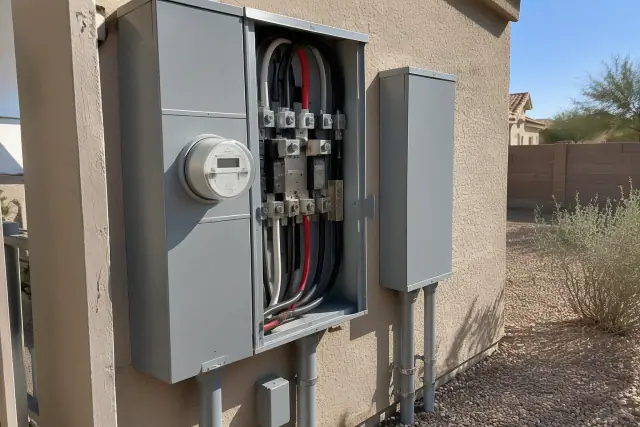
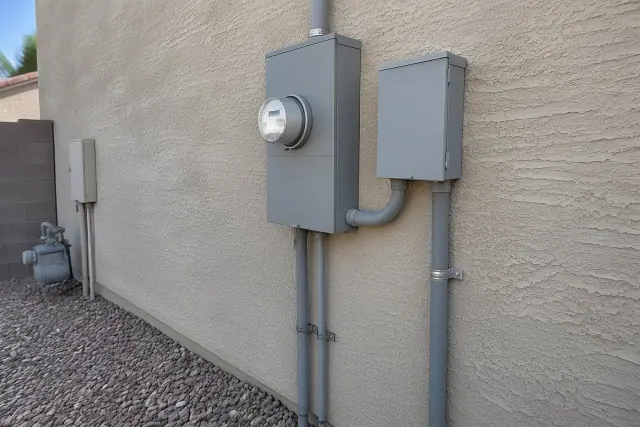
400 Amp service upgrade with heavy-gauge feeder cables on an exterior stucco wall in Phoenix, AZ.

Larger homes with dual AC systems, pool equipment, workshops, and EV charging may need more capacity than a single 200 amp service provides. We assess 400 amp options for high-demand properties in Paradise Valley and North Phoenix, including configurations using two 200 amp meter/panel combinations.

Request Estimate

Outdated Panel and Fuse Box Replacement

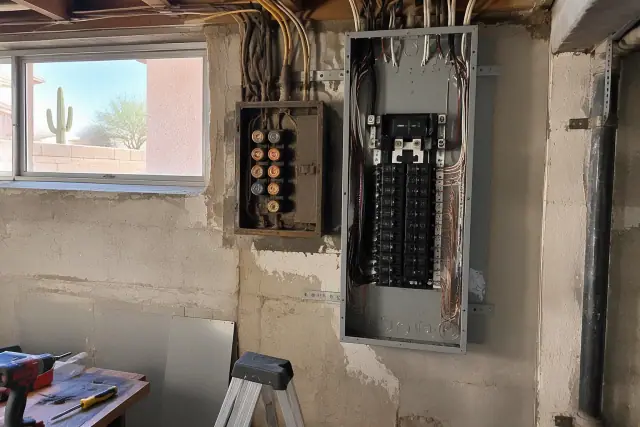
Outdated panel and fuse box replacement for a subpanel installation on a stucco exterior in Phoenix, AZ.

We replace Federal Pacific Stab-Lok and Zinsco panels rather than adding new circuits to equipment with known breaker concerns. In older central Phoenix neighborhoods such as Encanto and Willo, a project may also involve replacing an original 60 amp fuse box.

Request Estimate

Circuit Breaker Repair and Replacement

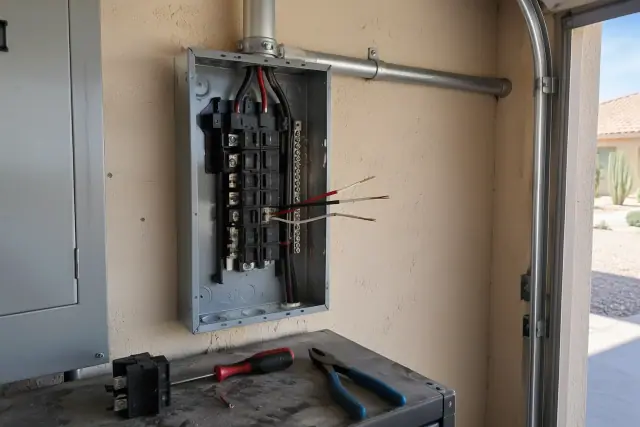
Circuit breaker repair and subpanel installation in a residential garage in Phoenix, AZ.

A failed breaker in a suitable Siemens or Square D panel may be replaceable without changing the whole panel. We check breakers that will not reset, trip repeatedly, or show signs of overheating and assess the surrounding connections before recommending the repair.

Request Estimate

Meter Box Replacement and Surge Protection

Meter box replacement and surge protection on a stucco exterior wall in Phoenix, AZ.

Corroded, damaged, or undersized meter sockets may need replacement during a service upgrade. We coordinate meter work with Salt River Project or Arizona Public Service and install whole house surge protection during major upgrades to help protect equipment from transient voltage spikes.

Request Estimate
Plan for Your Property

Subpanel Sizes and Property Options

The right setup depends on the building, the equipment it serves, and the capacity available upstream. These common applications show how we plan the panel and its circuits around the actual use of the space.

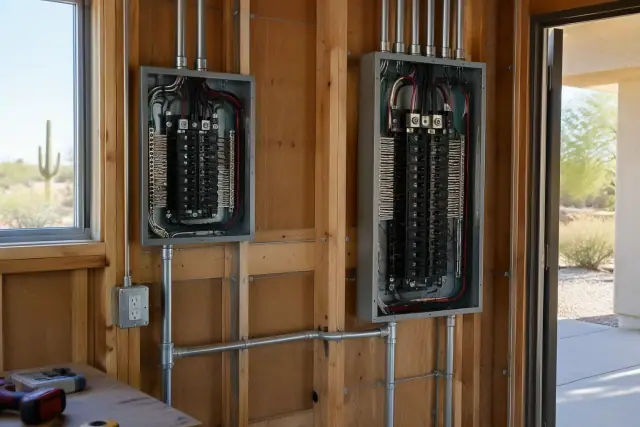
Electrician's progress photo of newly installed subpanels in a Phoenix, AZ detached garage workshop.

Detached Garage and Casita Subpanels

Detached garages and casitas commonly use 60 to 100 amp subpanels, depending on the calculated demand. We plan the feeder route along with the structure's disconnect and grounding electrode requirements.

  • Review lighting, outlet, and HVAC loads.
  • Assess the distance from the main panel.
  • Plan conduit and any required trenching.
  • Include a disconnect for the detached structure.
  • Address the structure's grounding electrode system.
Request Estimate
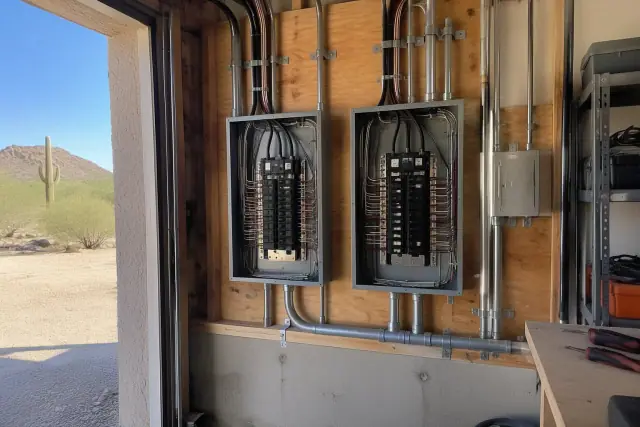
Workshop subpanel installation with neat wiring and metal conduit on wood framing in Phoenix, AZ.

Workshop Subpanels

Woodworking and metal shops may need a 100 amp subpanel for 240 volt equipment. Dedicated 20-30 amp circuits for tools are planned around each machine's requirements rather than the panel rating alone.

  • Account for saws, welders, and compressors.
  • Identify equipment that will run together.
  • Match breakers to conductors and connected loads.
  • Keep tool circuits distinct from general lighting.
  • Check the main service before adding workshop demand.
Request Estimate
Home addition and ADU subpanels installed on a stucco wall in Phoenix, AZ.

Home Addition and ADU Subpanels

Room additions, converted patios, and ADUs create new lighting, outlet, and HVAC needs. A dedicated subpanel groups those circuits while keeping the existing house circuits organized.

  • Calculate demand for the added square footage.
  • Include the new space's HVAC equipment.
  • Plan outlet circuits for the intended use.
  • Account for lighting throughout the addition.
  • Coordinate wiring inspections before walls close.
Request Estimate
Subpanels for new appliance loads and conduit in a Phoenix, AZ workshop.

Subpanels for New Appliance Loads

A new appliance or EV charger can change the capacity calculation substantially. A Level 2 charger alone can draw 40-50 amps continuously, so we assess existing demand before choosing a subpanel or a larger service.

  • Review AC and pool loads alongside the new equipment.
  • Match the feeder to the calculated demand.
  • Provide breaker space for the planned circuits.
  • Size a 15 amp lighting circuit for its conductors and load.
  • Check a 50 amp range circuit against the appliance requirements.
Request Estimate
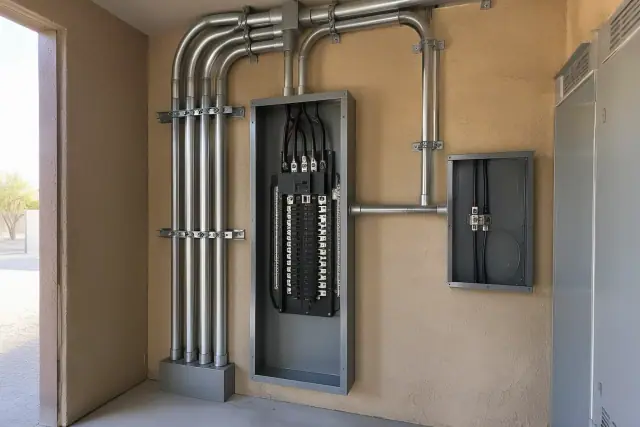
Commercial panel upgrades and subpanel installation in a utility room in Phoenix, AZ.

Commercial Panel Upgrades

Restaurants, shops, and light industrial spaces may need three-phase panels for heavier equipment rather than residential single-phase service. We assess the connected motor and equipment loads as part of commercial panel planning.

  • Include walk-in cooler electrical demand.
  • Account for compressors and production equipment.
  • Evaluate continuous operating loads.
  • Prepare for commercial plan review and inspection.
  • Address applicable fire and life-safety requirements.
Request Estimate
Finding the Right Fit

Choosing the Right Subpanel Approach

A free electrical estimate starts with the existing panel, the circuits you want, and the route between them. We use those findings to explain whether a subpanel fits the project or whether the service entrance needs attention first.

Load Calculations Before Equipment Selection

We assess square footage, HVAC tonnage, and appliance circuits using an NEC 220 load calculation. That check guides the choice between a subpanel, a 200 amp upgrade, and a 400 amp service, so panel size follows the property's demand.

Equipment Suited to the Existing Installation

We work with Siemens, Square D, GE, Murray, and Cutler-Hammer panel equipment according to the installation and your preference. Feeder length, breaker requirements, and the condition of the main panel help determine the appropriate configuration.

Permits and Inspection Coordination

Our work includes permit filing and inspection scheduling for the subpanel project. When a service upgrade also requires meter work, we coordinate the utility disconnect and reconnect around the required electrical inspection.

Planning Around Your Electrical Needs

Why Choose Us for Subpanel Installation?

Phoenix is a city of over 1.6 million residents with homes facing very different electrical demands. Our licensed, bonded, and insured electricians assess the actual equipment and planned circuits, explain the recommended scope, and provide a free electrical estimate before work begins. These common concerns help identify what the assessment needs to address.

Get a Free Estimate

Repeated Breaker Trips

Breakers that trip when AC and appliances run together need assessment before more circuits are added. We check whether the issue is circuit demand, a faulty breaker, or a capacity problem at the panel.

Lights Dim When Equipment Starts

Lights that dim when an AC compressor or dryer starts can point to a voltage-drop or capacity concern. We inspect the panel and connections to determine the cause before recommending a subpanel.

No Space for Another Circuit

A full breaker panel can leave nowhere to connect a new appliance or addition. We check both available breaker positions and amperage headroom, because extra circuit space only helps when the existing service can carry the load.

A Detached Space Needs Power

A workshop, garage, or casita needs a feeder plan suited to its distance and equipment. The project also needs attention to the detached building's disconnect and grounding, along with any underground conduit or trenching.

An Aging Main Panel

Adding a subpanel downstream does not correct an unsafe main panel. Federal Pacific equipment found in some homes built before the 1980s, Zinsco units, and older fuse boxes need evaluation for replacement before the new installation proceeds.

Older Service Meets Modern Demand

Homes built before 1990 in Sunnyslope and Maryvale may still have 60 or 100 amp service. New HVAC, pool equipment, or EV charging can push demand beyond that service, making an upgrade part of the project.

From Assessment to Inspection

Our Subpanel Installation Process

We move from inspection and load planning through permits, feeder installation, and testing. Each stage checks that the proposed circuits fit the existing service and that the finished work is ready for the required inspections.

01.

Inspect the Existing Panel

We check the panel's amperage rating, open breaker space, wire condition, and grounding. Corroded lugs, loose neutrals, or heat damage can change the scope before a new feeder is planned.

02.

Calculate the New Electrical Load

We review the circuits and equipment you want to add alongside the existing household demand. The calculation determines the proposed feeder capacity and whether the main service can support the project.

03.

Plan the Route and Obtain Permits

We confirm the subpanel location, feeder route, and any trenching needs before filing the permit with the local building department. Planning includes the applicable NEC Article 225 and 408 provisions and, for detached structures, the supply and disconnect provisions addressed in NEC 225.30 through 225.36.

04.

Mount the Panel and Install the Feeder

We mount the load center and install feeder conductors selected for the amperage, route, and equipment. Wire selection considers NEC Table 310.16 and voltage drop on longer runs.

05.

Connect and Test the Circuits

Our electricians install breakers matched to the conductors and connected loads, check neutral and ground separation at the subpanel, and complete continuity and grounding checks. Connections and terminations are checked before the installation is presented for inspection.

06.

Complete Required Inspections

We schedule the required rough-in and final electrical inspections, including checks needed before wiring is concealed. If the project includes service entrance work, utility coordination is part of arranging restoration of power.

Plan Your New Circuits

Request a Subpanel Installation Estimate

Tell us what you want to power and where the new circuits will be used. Phoenix Electrical Panel Upgrades will assess the existing service, review feeder access, and provide a free electrical estimate for your project.

Costs, Capacity, and Installation

Subpanel Installation FAQs

These answers cover common questions about subpanel cost, service capacity, feeder planning, and the installation process in Phoenix.

Discuss Your Subpanel

Subpanel installation in Phoenix typically runs $1,200 to $3,500, depending on amperage, feeder length, and whether underground conduit requires trenching. Permit fees are typically separate from the installation cost. We provide a free electrical estimate after reviewing the property and calculating the planned load.

Yes, when the load calculation confirms that the existing service can support the combined demand. The subpanel rating does not add 100 amps to the home's total service capacity. We check the main panel's available breaker space, existing AC and appliance loads, and feeder requirements before recommending that setup.

Subpanel work involves load calculations, feeder sizing, grounding, bonding, and breaker coordination. Errors can create electrical hazards and cause an inspection failure. A licensed electrician can evaluate those requirements together and carry out the permitted installation.

Phoenix Electrical Panel Upgrades handles permit filing and inspection scheduling for the installation. Projects in Phoenix go through the city's building permit process, while Mesa and other East Valley cities have their own permitting offices. Inspection scheduling and permit turnaround can vary between jurisdictions, including Chandler, Gilbert, and Tempe.

The assessment needs to confirm available service capacity, feeder and breaker sizing, panel location, and grounding requirements. Detached structures also need attention to their disconnect and grounding electrode system. Permit and inspection requirements are included in the installation plan.

A standard new subpanel feeder uses four conductors: two hot conductors, a neutral, and an equipment ground. The neutral and equipment ground remain separate at the subpanel. Older three-wire feeder arrangements need evaluation rather than being copied into a new installation.

The location needs clear working space and safe access, generally including a space 30 inches wide and 36 inches deep in front of the panel. The highest breaker operating handle should be no more than 6 feet 7 inches above the floor, and bathroom locations are unsuitable. We confirm the placement, headroom, and other applicable requirements before mounting the panel.

A 100 amp subpanel generally costs $1,200 to $2,800 installed, with parts typically running $200 to $400 and labor $500 to $1,500 before trenching or long feeder runs. Route length, breaker count, conductor selection, and permit fees affect the project total. An on-site estimate establishes the scope for your installation.

Most subpanel jobs take one to two days, although trenching, feeder access, and the work involved affect the schedule. Permit, inspection, and utility coordination can also affect when a project is ready for use. Licensed electricians in the Phoenix market typically bill $75 to $225 per hour, with the overall scope determining labor cost.

A service upgrade may be needed when the main service cannot support the added demand or when the existing main panel needs replacement. Full 200 amp service upgrades in Phoenix average around $1,653, with a typical range of $1,240 to $2,066. Older service entrance work, permit fees, meter coordination, or service mast repair can push totals higher.

Whole house surge protection addresses transient voltage spikes that can affect HVAC compressors, electronics, and appliance boards. We install panel-mounted surge protection during major service upgrades. The surge protector is a separate protective component within that work.

We recommend an electrical safety inspection every few years, especially for panels over 20 years old. The inspection checks for corroded connections, loose neutrals, and heat damage. Repeated tripping, a breaker that will not reset, or signs of overheating call for assessment rather than waiting for the next routine check.

Feeder selection depends on amperage, route length, conductor material, and the equipment involved. A 60 amp design may use 6 AWG copper, while a 100 amp design may use 2 AWG copper or 1/0 aluminum. Those sizes still require project-specific evaluation against NEC Table 310.16 and voltage drop, so we determine the conductor size during installation planning.