The Owner Handles the Box
The enclosure and meter base belong to the property owner. Repairing a rusted, cracked or burned box usually means hiring and paying an electrician to replace the affected equipment.
Phoenix Electrical Panel Upgrades helps Phoenix property owners arrange meter box replacement when an enclosure is cracked, scorched or flagged during an inspection. The owner usually pays to replace the box and base, while the utility owns the meter itself. Knowing that distinction helps you contact the right people and coordinate the work before power is disconnected.
The enclosure and meter base belong to the property owner. Repairing a rusted, cracked or burned box usually means hiring and paying an electrician to replace the affected equipment.
The utility maintains the meter that records electricity use and its seal. It handles the service disconnect and returns to reconnect and reseal the meter after the required approval.
A licensed electrician checks the service amperage and wire gauge, arranges the permit and utility shutdown, and replaces the base. Inspection and reconnection need to be coordinated with that work.
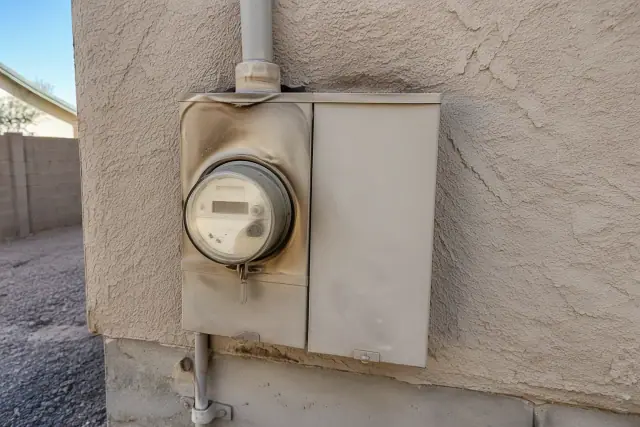
Cracks, rust and burn marks help an electrician assess enclosure damage. A damaged box needs evaluation before deciding whether a cover repair will be enough.
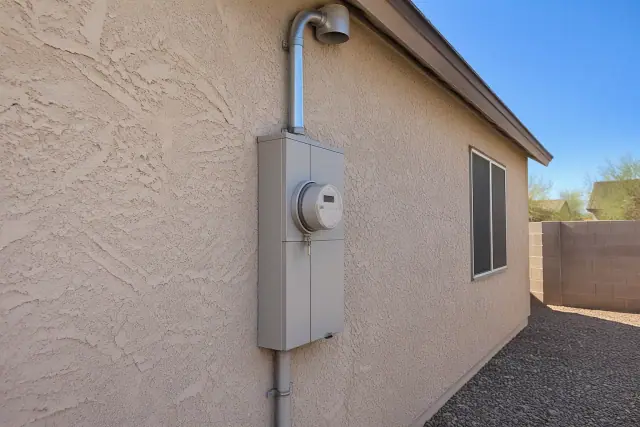
The conduit, weatherhead and wall mounting can expand the replacement scope. Phoenix stucco and block surfaces can affect how the new enclosure is secured.
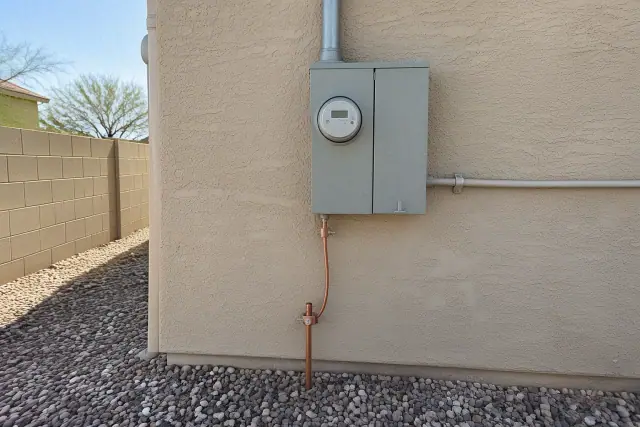
Grounding and bonding are part of the completed installation check. Inspectors also review weatherproofing and clearance before authorizing reconnection.
When the base itself is sound, replacing only a damaged cover or door often costs a few hundred dollars. An electrician should confirm that the damage is limited to that part.
A full enclosure swap with new conduit and a weatherhead typically costs $800 to $2,100. Service amperage and mounting conditions influence the installed cost.
Meter box hardware alone typically ranges from $150 to $500, depending on the amperage rating and base type. The installed total also includes labor, permit fees and utility coordination.
A standard 200 amp residential base and a heavier 400 amp commercial socket have different equipment requirements. The replacement must match the service amperage and manufacturer specifications.
| Equipment or task | Who is responsible? | What happens next? |
|---|---|---|
| Meter and seal | Utility | The utility maintains the usage meter and handles removal, reconnection and resealing. |
| Meter box, base and enclosure | Property owner | The owner hires a licensed electrician to assess damage and replace the affected equipment. |
| Weatherhead and service entrance conductors | Property owner | The electrician checks whether these customer-owned parts also need replacement. |
| Permit and physical replacement | Electrician handling the project | Arrange the permit and utility disconnect before replacing the base. |
| Inspection and return of power | Local inspector, then utility | The inspector reviews the installation; the utility reconnects after the required approval. |
For a Phoenix meter base replacement, have your electrician arrange the electrical permit and inspection with the City of Phoenix. Properties in unincorporated Maricopa County use the county's Planning and Development Department. The electrician confirms the base rating and wire gauge, coordinates the utility disconnect, then removes the old enclosure and installs the replacement. National Electrical Code Article 230 addresses service conductors and equipment; the installation also needs the applicable grounding and bonding provisions. Inspection approval comes before utility reconnection. If corrections are required, a return inspection and another utility appointment can extend the outage.
For a single-family home, the owner normally arranges the box replacement; in a multi-unit property, check the ownership arrangement and HOA governing documents before authorizing work. Older Phoenix homes with original 1960s or 1970s wiring and undersized boxes may also need grounding, bonding or service equipment upgrades. A straightforward socket swap can start around $500, while extensive enclosure and conduit work can reach $2,100 or more. Commercial properties may have CT-rated metering cabinets that need equipment approval and additional utility coordination. Confirm those requirements before ordering a replacement.
If the meter itself fails, the utility handles its replacement; a damaged surrounding box remains a separate repair for the property owner to arrange. Insurance may cover damage from an insured event such as fire, lightning or a vehicle strike, while routine wear and corrosion are typically treated as maintenance; confirm coverage with your insurer. A one-day residential installation does not guarantee power will return that day, because inspection and utility scheduling also control the timeline. Summer heat above 110 degrees and heavy air-conditioning demand can make that coordination especially important in Phoenix. Gas meter enclosures require a different licensed trade, so electrical meter box work does not cover both systems.
Share the condition of the box and any notice from the utility. Phoenix Electrical Panel Upgrades can inspect the existing equipment, explain the proposed scope and coordinate the disconnect, inspection and reconnection across the Salt River Valley.